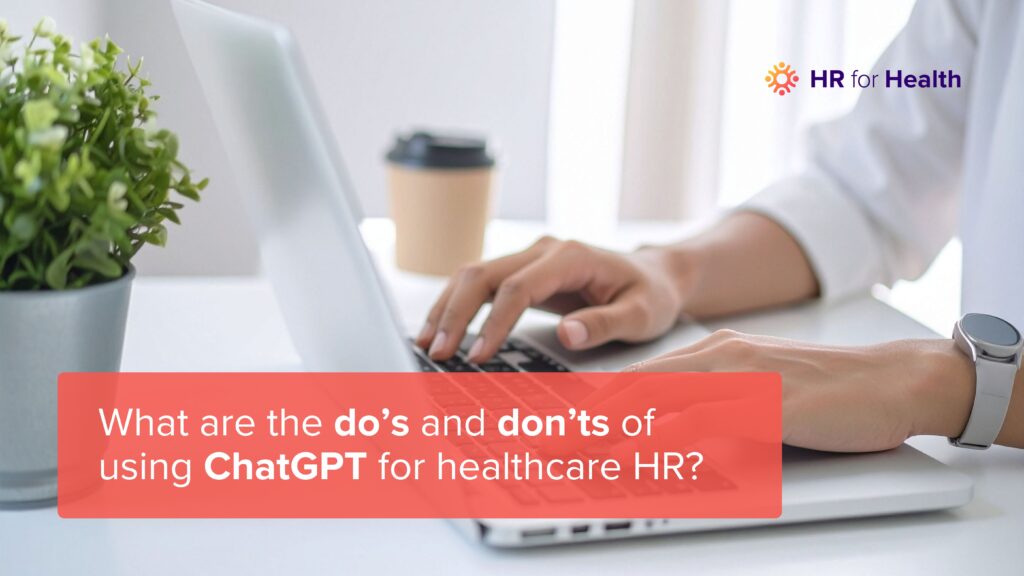
Just about everyone is using artificial intelligence these days. Yep, that includes HR folks. ChatGPT healthcare HR tasks are a lot faster than doing everything manually, but what are the best (and most legal) uses for AI? For healthcare practice owners and office managers, the temptation to use AI is practically irresistible. It promises to make work faster and easier. Meanwhile, the daily pressures of running a practice refuse to let up.
But if you’ve ever used ChatGPT, you know that it, um, doesn’t always get things exactly right. At the intersection of AI tools, HR compliance, and healthcare-specific regulations, it’s a data minefield of potential legal and privacy violations that could expose your practice to costly lawsuits and regulatory penalties.
Scary stuff, to be sure, but using AI for HR tasks isn’t always a bad thing. We’ll help you learn how to use AI more safely and choose tools that can give you more relevant answers than generic ChatGPT.
Where Does ChatGPT Get Its Information?
Vaguely, the internet. For a while, AI pulled most of its information from Reddit, Wikipedia, and YouTube. Newer models of ChatGPT use a wider variety of sources, but they still aren’t necessarily fact-checked. Some sources are, but not all. And when sources contradict each other, AI just chooses its favorite.
When you’re trying to get your HR right and your practice’s reputation is on the line, you can’t trust generated output that might be built on some random Reddit comment.
AI output could be incomplete, outdated, or just plain wrong. Besides, in the United States, employment laws are all over the place and constantly changing. What may be legal in Connecticut may be against the law in California.
The HIPAA Compliance Problem
Finding HIPAA-compliant AI is a real concern for health and dental practices. Aside from possible employment law violations, you could run into HIPAA issues. Whatever you input into general AI tools may be stored, used to train future models, or exposed through possible security breaches.
Healthcare AI compliance does exist, but not when you upload sensitive information to unsecured tools. Even when you turn off ChatGPT’s memory, it’s never safe to enter private data, personally identifying information, or anything you wouldn’t want made public. General AI tools, HR compliance, and HIPAA just don’t mix.
Do’s and Don’ts of ChatGPT for Healthcare HR
We’re not saying you should never do general ChatGPT HR tasks. You’re in a hurry and AI can give you answers in, like, two seconds. Nowadays, complete abstinence from AI will only slow down your work. Just pay attention to how you choose to use artificial intelligence healthcare tools.
Don’t use ChatGPT for any of these tasks:
- Finalizing handbook content, HIPAA compliance, or practice policies
- Approving employment contracts, offer letters, or any kind of legal agreement
- Getting info on state-specific employment laws or ADA accommodations without double-checking
- Calculating overtime without approving its work, since they vary significantly by state and the math can be tricky
- Getting legal or tax advice without getting approval
- Making hiring or firing decisions
It can help create rough drafts for a lot of those things, but don’t give AI the final say. In any case, never share any kind of personal details about your patients or employees. That includes names, emails, dates and times of locations and events, etc.
Thankfully, ChatGPT has some great HR uses, some of which you’re probably doing already:
- Brainstorming interview questions, then checking to make sure they’re legal
- Drafting initial job descriptions so you can customize them for your practice
- Generating templates for presentations, training, or routine communications
- Drafting non-essential emails and messages
- Planning team meeting agenda topics and talking points
- Coming up with performance review questions to get the ball rolling
- Cleaning up emails for professional tone and style
- Researching general topics for high-level answers
The common thread here is that generative AI for HR should be an idea sparker, template maker, and general task speeder-upper. It’s not a compliance machine, and it can’t make real decisions for you. The best thing AI does is point people in the right direction.
Where Can You Get HR-Approved AI Answers?
Instead of experimenting with AI tools for HR compliance and hoping for the best, start with purpose-built systems designed specifically for your compliance needs.
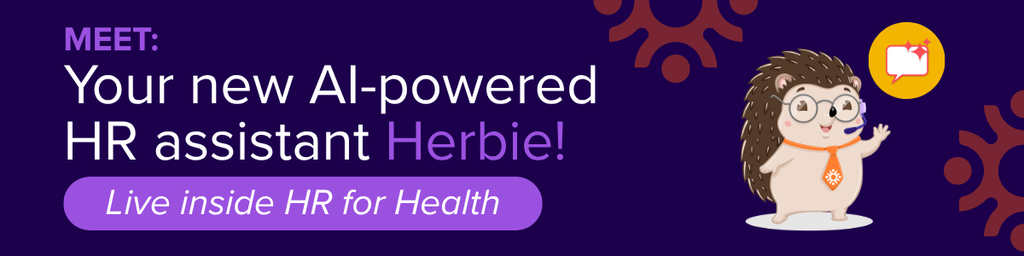
Meet Herbie, an AI-powered HR assistant that helps you get faster answers to everyday HR questions, right inside HR for Health. Herbie was built with guardrails to explain HR policies and concepts, provide state-specific compliance guidance, interpret custom handbooks, and escalate your questions to our HR experts when necessary. Instead of pulling from the open internet for answers, our AI tool uses trusted sources and keeps everything locked inside HR for Health.
Ask Herbie a question to see how it works!
Get Compliance-First HR Solutions Built for Healthcare Practices
It’s okay to use AI. Not just because everyone else is doing it (although, yes, they are) but because artificial intelligence is part of the future of healthcare. Besides, there are lots of annoying tasks you can hand over to the robots. When used safely, AI is a great resource for getting those high-level ideas started and taking steps out of repetitive processes.
Got questions on how technology fits into your practice? Skip the chatbots altogether and contact HR for Health’s compliance specialists today.