
So you’re finally compliant with all employment laws! That’s fantastic news, and your employees are probably a lot happier. So’s your lawyer. But wait. That means you weren’t compliant before, and there’s a whole mess of errors, compliance gaps that never got closed, and things you should have done right the first time. How do you fix past compliance mistakes without getting sued for them? Should you fix them at all… or just move on with a clean slate?
The 3 Past Compliance Mistakes Most Likely to Haunt Your Practice
We aren’t offering legal advice, but no, you probably should not just move on and forget it all happened. Making improvements doesn’t undo previous violations, but it does set you on a better path. Even when you do your very best, you might still have lingering issues to deal with. This is only the tip of the non-compliance iceberg (we have seen a lot of creative ways practices encounter HR issues) but if there’s anything that could come back to bite you even after you’ve made corrections, it’s these:
- Worker misclassification. Misclassifying employees as independent contractors is extremely common, but it’s also unlawful.
- Wage and hour violations. Overtime is practically a given in the health and dental industries, but calculating it correctly can be tricky, especially if you’re fuzzy on exemption status.
- Missing documentation. When you hire, you must collect certain documents and store them for a specific length of time. When you fire, you must be able to show your reasoning.
Accidents do happen, but when you make decisions to be non-compliant more than once, it becomes willful, and therefore comes with much stronger consequences. Not just a past compliance mistake.
What is Considered Willful?
It’s hard to prove that something isn’t willful, and the burden of proof remains with you as the employer. Willfulness does not necessarily mean you went out of your way to purposely do wrong by your employees. A lot of the time, willfulness is the result of knowing better, but choosing not to act. Here are a few ways this can happen:
- You actively chose to do something illegal (this is the worst case scenario)
- You received a complaint but did not investigate
- You had a prior audit or a lawsuit that flagged the same issue
- You had industry guidance but you ignored it
- Your HR software flagged something and you dismissed it
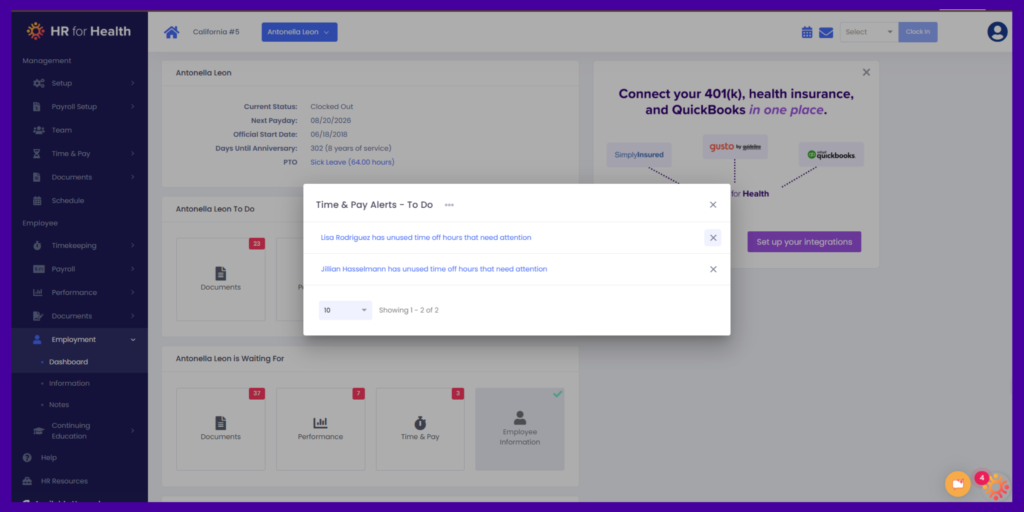
If you’re using HR for Health, we notify you about areas of non-compliance with an alert on your dashboard. If it’s something significant and you bypass the notification over and over, that would be considered willful non-compliance.
Willful non-compliance (and past compliance mistakes) is a lot harder to rectify, and it generally comes with steep fines and even legal trouble.
What’s at Stake with Past Compliance Mistakes?
Speaking of things you might owe, that could include:
- Back pay. This is the amount of pay, wages, benefits, or overtime that you didn’t pay for.
- Liquidated damages. You might need to pay additional damages, which essentially doubles the dollar amount of the back pay.
- Penalties. Depending on what happened, you may be required to pay penalties for violating the law.
- Attorney fees. If it goes to court, someone’s got to pay.
Beyond the financials, reputational damage could hurt your business. It could be harder to hire and your patients will find out, too. Auditing will probably be in your future.
Isn’t There a Statute of Limitations On This?
Federal and state laws do have statutes of limitations on wage claims, but they are longer than you think.
Using backpay as a benchmark, the Fair Labor Standards Act (FLSA) has a two-year statute of limitations on unintentional past compliance mistakes, but three years for willful non-compliance. Some states have even longer time frames. For example, California’s statute of limitations extends to three years, and New York goes back six years.
That means that if you’ve been miscalculating overtime for three years, then yes, you might owe three years of back wages to every affected employee… even if they don’t work for you anymore.
Get the Right Support, Then Plan Your Next Move
Once you know what kind of past compliance mistakes you’re actually dealing with, you’ll need to decide what to do next.
Remember, nothing in this guide is legal advice. It’s just what we’ve observed, what you need to know about compliance, and how we can help you stay on track. HR for Health does not offer legal support, but we do know a good employment attorney.
After you’ve gotten the legal guidance you need, you might want to consider doing a self-audit and a voluntary correction. That means calculating what you owe, paying it back, and documenting that you did it correctly.
You’re already doing the right thing by getting compliant. Now seal up the rest of your compliance gaps so it doesn’t happen again. Talk to our HR experts about how you can stay on the right side of the law.