

Certification expirations have a way of sneaking up on you, don’t they? At the same time, you might be missing some of your employee’s most impressive learning experiences if you aren’t using a CE tracking system with your practice’s growth in mind.
Continuing education (CE) exists for two reasons. Licensure maintenance is your priority, obviously. Physicians, nurses, pharmacists, therapists, veterinarians, and dental professionals all need to keep up with their continuing education to maintain their license. Renewal requirements vary, but no matter what, you’ll need to keep track of it.
The other reason is for opportunity. No matter your industry, you’ve got to keep learning to keep up. Healthcare has had some incredible breakthroughs in the past few years, so it’s a genuinely exciting moment for education. There are so many things you could learn about! Best of all, you can bring those learnings back to your practice.
How Does CE Work?
Continuing education units and certifications are two different ways professionals maintain and expand their qualifications. CE units are hours of training that licensed professionals must complete periodically to keep their licenses active. These can include state-mandated courses on specific topics as well as elective courses that the professional chooses based on their area of practice. Courses can typically be completed in person, virtually, or online. Certifications are separate credentials earned by completing a specific program or passing an exam, demonstrating a defined level of expertise in a particular skill or area. Unlike CE, certifications are usually a one-time achievement tied to a specific competency, though some require periodic renewal.
Examples of CE courses include infection control, CPR, opioid awareness, and other state-required topics, along with elective courses relevant to the professional’s field.
Examples of certifications include credentials like CPR/BLS certification, local anesthesia administration, or specialty-specific credentials that go beyond standard licensing requirements.
Compliance First, Then Growth
What would you do if you found out one of your provider’s licenses lapsed on Friday, and they’ve got patients scheduled Monday? You could take them off the schedule, but then you have a staffing issue. You could pretend it didn’t happen, but then you’ve got a liability issue. Either way, it’s a problem, and it was totally preventable if you had automatic updates.
On the flip side, what would you do if one of your nurses took courses specializing in cancer care? What if your office manager earned their MBA, or your optometry assistant got certified in nutritional counseling? Don’t just say “congrats” when you could be documenting career progression, keeping tabs on new opportunities in patient care, and specializing. CE tracking keeps you compliant, sure, but it can also be a practice growth pipeline if you want it to be.
See What Better CE Tracking Looks Like
Within HR for Health, you can see all your people’s CE and certification details at a glance. Here’s what that looks like, depending on your role.
Management Level View
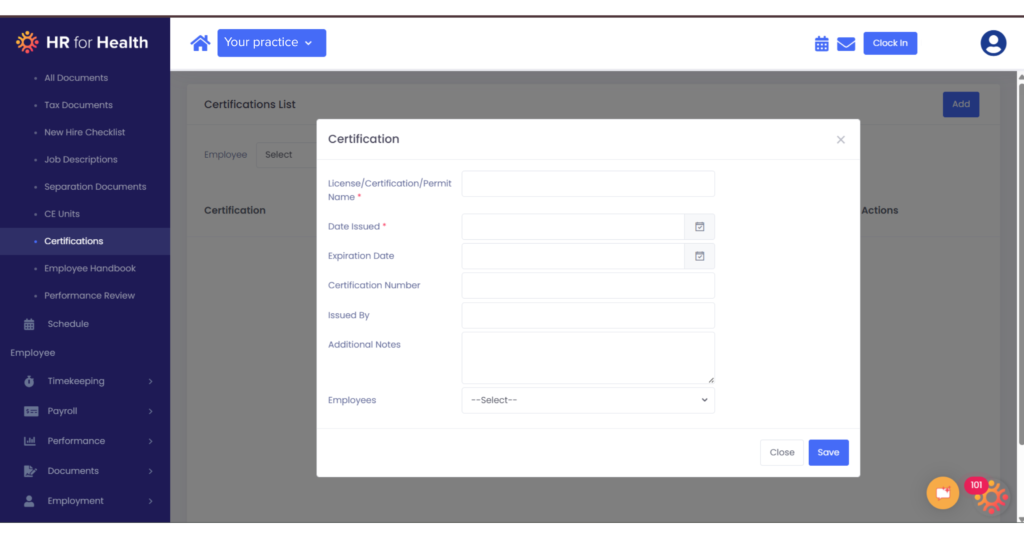
From a management perspective, CE units and certifications can be viewed under each employee’s Documents tab. There, you can see details, make edits, or delete entries if there’s a mistake. Certifications with expiration dates will automatically alert you when due dates are coming up, so it’s hard to miss renewal deadlines.
As you track your employees’ career progress and performance, you can view the CE tracking section (Management > Documents > Certifications) to see how they’re keeping up with goals. Peruse your team’s certifications once in a while to see what your team is learning independently.
Employee Level View
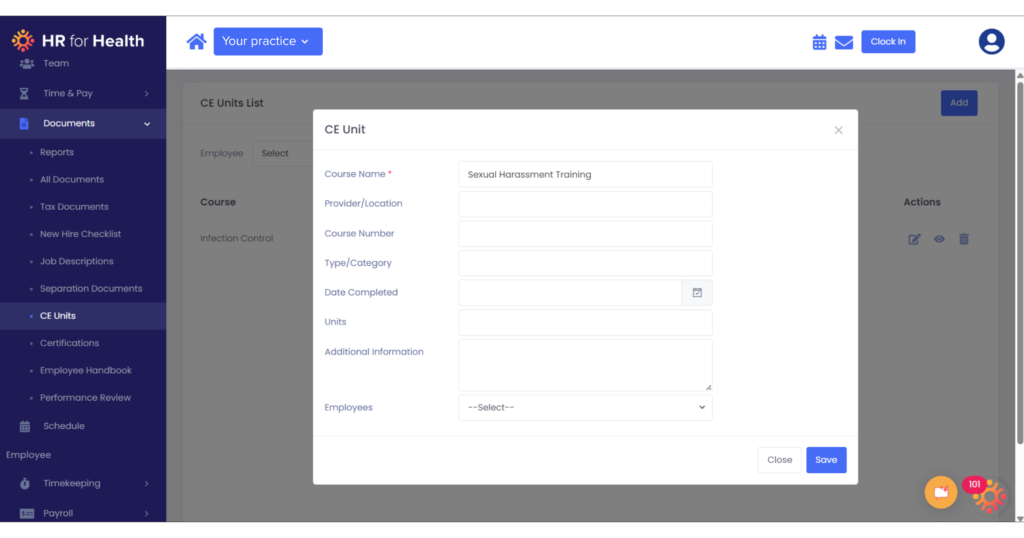
What’s cool about HR for Health’s certification tracking is that the details can be updated and monitored by both managers and employees. You can both add basics like the course name, date, and certification number, plus an optional detailed description. Expiration notifications pop up for both managers and employees, so there’s clear visibility into compliance.
Employees can add CE like CPR and mandatory sexual harassment training, but they can also add their “side quest” certifications, too. The details are a blank slate, not a dropdown, so even the highly specific, non-healthcare courses can be used to highlight professional development.
HR for Health Puts Everyone on the Same Page
You won’t need to mark your calendar or fill out a sketchy spreadsheet ever again. HR for Health’s CE unit tracker offers clear visibility and a paper trail for compliance. You’ll already know who’s on track and who’s been falling behind on their homework. At the same time, you’ll get a sneak peek into your employees’ professional interests. And who knows! Those one-off courses could be the exact thing your practice needs to get growing.
Want to learn more? Schedule your HR for Health demo for a private lesson.