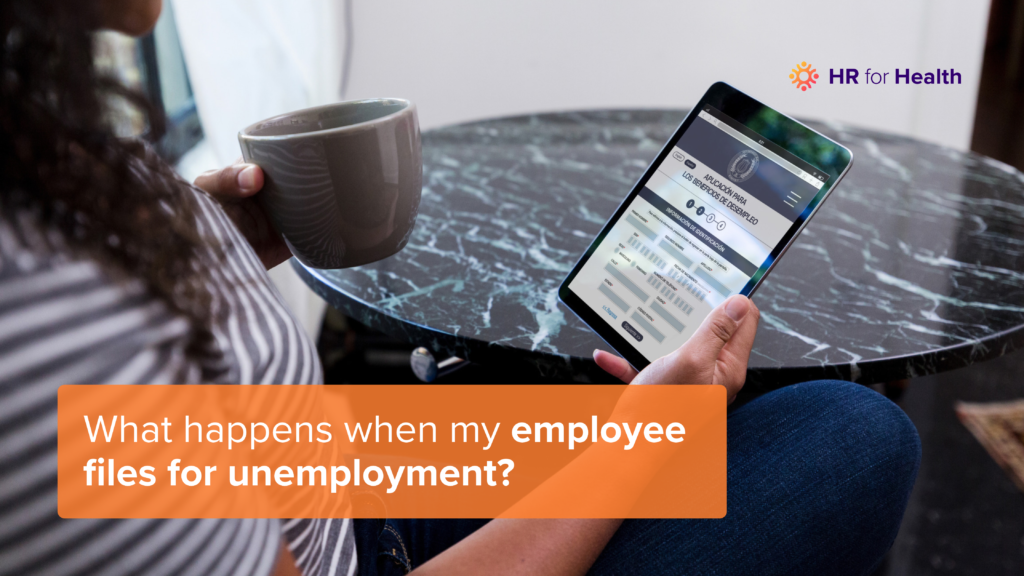
As a practice owner, unemployment is partly your responsibility. Not all of your workers will be eligible and it doesn’t mean you’ll have to keep sending paychecks after you’ve let someone go. At the same time, you’ll have work to do before, during, and after the unemployment claim crosses your desk. See how unemployment works from an employer’s perspective. Then get our all-in-one guide so you can process claims correctly and compliantly.
PS: None of the information on this page is legal, tax, or financial advice. We’re just showing you how all the pieces fit together.
How the Unemployment Process Works from an Employer’s Perspective
Unemployment benefits are largely governed by the states. Yes, there’s a federal component and there are sweeping laws and guidelines each state must follow. But beyond that, the states determine who, when, and how much each worker may be entitled to collect. No matter what state you or your employees are in, this is generally how unemployment works:
- Employ Someone. This part’s obvious, but correct employee classification matters a lot. We’ll get into that in a moment.
- Let Them Go. If you’ve terminated employment and it was no fault of their own, they may wish to file a claim.
- Receive Notice: The state agency will send you an initial claim notice (usually electronically via SIDES or a state portal).
- Verify Information: You must confirm employment dates, final wages/severance, and the explicit reason for separation.
- Respond Within the Deadline: Failing to respond on time forfeits your right to contest the claim and can permanently hit your state unemployment tax account, even if the employee was fired for gross misconduct.
Tip: Assume all state deadlines refer to calendar days rather than business days.
The timeline begins counting down from the mail date or electronic transmission timestamp printed on the notice. Not the day you open or receive it.
What Do Employees Get During Unemployment?
In case you were wondering how unemployment works for your ex-employees, they can collect a weekly benefit from their state during their unemployment period. Depending on the state, this amount is anywhere from $275 to over $1,100 per week, usually for up to 26 weeks. It’s based on the cost of living, how much they earned before, and a few other variables. They need to use this time to look for new work and check in with the state periodically.
Who’s Eligible for Unemployment Benefits and Who’s Not
Unemployment is for employees, not contractors
An employee is someone who works for you, and you dictate important things like how, where, and when the work gets done. You provide the tools and the schedule, and you keep them trained on the way you want them to do the work. They get a W-2 at tax time and they may be eligible for unemployment.
A contractor is someone who does work for you, but they don’t work for you. They set their own schedule, create their own techniques, and they often provide their own equipment. If it helps, think of them as a vendor… but instead of selling products for your practice, they’re selling you work-related services. They get a form 1099, and since they were never an employee, they can’t claim unemployment.
There’s a lot more nuance to the difference between contractors and employees. We highly encourage you to study up before you make an expensive mistake.
It depends on why employment ended
The second question is why they no longer work at your practice. All but one state has at-will employment laws, but that doesn’t mean that every type of “you’re fired” can result in unemployment. Letting someone go because of budget cuts, business needs changes, restructuring, layoffs, or redundancy may qualify them for unemployment. This is no-fault termination.
Now, if they quit, retired, or you fired them for a good reason like misconduct, then they should generally not try to claim unemployment. This is one of the many reasons why documentation is so important!
Check the paychecks and the paperwork
A worker’s eligibility for unemployment depends on how much they’ve earned before employment ended. This threshold is state-defined, and if the worker hasn’t been at your practice long enough or earned enough to meet the bar, they may not get benefits.
Logically, someone who is not legally eligible to work in the United States is not eligible to receive unemployment benefits. This is one of the big reasons you’ll need to make sure your I-9s are complete and correct. They’ve changed recently, so now is a good time to make sure those are accurate.
Plan for the next step
This part is out of your hands, but if your ex-employee wants to actually collect their benefits, they’ll have to put some effort into getting another job. Unemployment doesn’t last forever, and if they aren’t actively looking for new work, they could lose their payouts early.
| ✅ An employee who was let go through no fault of their own, meets certain wage thresholds, is legally permitted to work in the US, and is ready for another job can file for unemployment. ❌ Someone who was fired for a good reason that was well-documented, quit on their own, works as a contractor, hasn’t earned enough to meet the threshold, isn’t legally eligible to work in the US, or wants to “take some time for themselves” can’t claim unemployment. |
Who Pays for All This?
You do, in a way. Unlike Medicare or Social Security, employees don’t pay into their own unemployment fund. It’s on you, the employer, to foot the bill through taxes. (Unless you’re in Alaska, New Jersey, or Pennsylvania — then the employees kick in with their taxes, too.)
This funding and taxing is both federal and state-level. The Federal Unemployment Tax Act (FUTA) is a percentage taxed on the first $7,000 earned by each employee. That figure won’t change without an act of Congress. The State Unemployment Tax Act (SUTA) is a second tax rate, but the exact percentage and amount taxed varies wildly depending on your state, your history, and lots of other factors.
As far as your role in the process is concerned, the federal government has little to nothing to do with unemployment insurance or payouts beyond FUTA. They set guidelines and help with funding if needed, but really, it all comes down to the state.
Now that You Know How Unemployment Works, Learn What to Do with a Claim
Unemployment is primarily a tax thing, but do you remember when we talked about how once you receive notice, then you’ll verify information and respond in a timely manner? It can be a little tricky, but we broke it all down for you. Cross-check your documents to our full guide. Still stuck? Talk to one of our HR experts for on-demand support.
Get our all-in-one guide to unemployment that breaks down your state’s taxable wage base, which forms you may receive (and which ones might be fake!), and how to respond correctly.