
First, to answer the question we know you’re wondering: no, not every practice needs a full-time in-house HR person. But there’s a big difference between having a dedicated person on staff and just winging it. Small practices can often handle basic HR functions, even if they have limited resources. It’s possible to do DIY HR well, but if you’re randomly guessing or googling every question without checking with a professional, you’re asking for compliance issues.
Why Do You Need HR for Your Practice In the First Place?
Based on our risk assessment survey of health and dental practice owners,1 we know that about a third of practices are doing DIY HR. We also know that a good chunk of them are making compliance mistakes. These kinds of mistakes are bigger than “oops, I forgot something.” These are the sorts of things that can trigger a compliance audit or invite employee lawsuits.
We don’t say this to scare you, and we’re not trying to be the fun police. We say this because a lot of practice owners don’t realize that HR has a bigger role than shuffling papers.
- Hiring and onboarding. You can’t have just any random person taking care of your patients. You need to hire only qualified people, make sure they’re keeping up with continuing education, and give them the onboarding they need.
- Documentation. This is the paper shuffling part, but those papers are pretty important. Even tiny errors can mean thousands in fines.
- Policies and enforcement. Your employees are going to break your policies (whether they mean to or not) and you have to enforce them properly.
- People management. As much as you prepare, employees will throw curveballs sometimes. How will you handle it? How will you help your best people grow their careers?
- Payroll and timekeeping. Employees care a lot about accurate payroll, and your state may care just as much about your overtime and time tracking compliance.
- Competitiveness. If you shrug your way through HR, that doesn’t inspire much trust. Top talent prioritizes well-managed benefits, policies that make sense, and employers who treat them right.
- Not getting sued. There are a lot of ways things can go wrong. Good HR that keeps your practice compliant can help you avoid the vast majority of those things.
DIY HR Eats Up Your Precious Time
You didn’t go to medical or dental school to do all those HR tasks. We highly doubt you’re keeping up with employment law changes, trends in human resources, and crunching numbers for payroll processing. Those things will drain your time if you’re not careful.
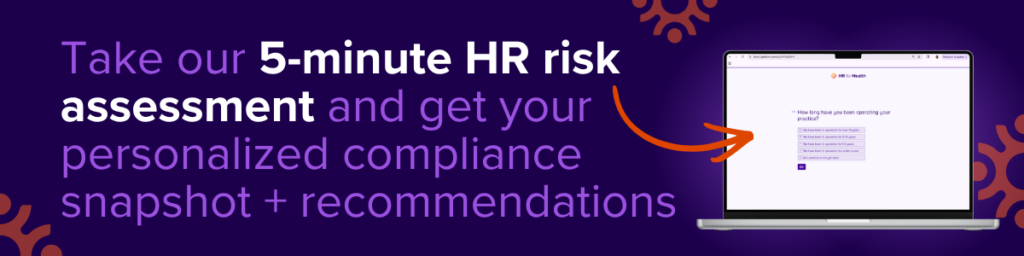
In our risk assessment, we found that about 11% of practice owners spend more than 10 hours per week on HR tasks. We applaud the effort, but we know that’s not the best use of your time. It could be used more efficiently, at the very least.
On the other hand, about 50% of practice owners said they spend less than 2 hours per week on HR, which is a concerningly short amount of time if they’re DIYing it. How can you handle your schedules, run payroll, and check in with your people in that amount of time? Not to mention the surprise sick days, documentation, policy checks, random legal questions, and “please shut the door” conversations.
Well-intentioned practice owners still make these mistakes:
- Googling and asking AI for everything
- Guessing and hoping for the best
- Assuming their team would never pursue legal action
HR compliance audits do happen, and if you’re found in the wrong, you could be on the hook for humongous fines and more.
We’ll Help You Do DIY HR Safely
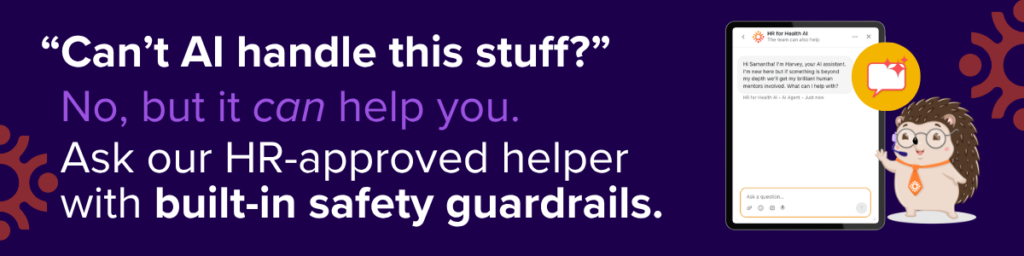
In this case, our definition of DIY means using a suite of tools that are custom-designed for health, dental, veterinary, optometry, and chiropractic practices. You can learn how to handle most processes with your own team, but only if you have the right tools and can ask for help at the right times.
Know When It’s Time to Hire
Like we said, you don’t necessarily need to hire an HR person to sit in an office in your practice all day, every day. But some practices do.
You might want to consider hiring an in-house HR pro if:
- Your practice is large, growing, or has multiple locations
- Your team needs extra interpersonal support, career development, or talent acquisition
- Your compliance is a giant mess or you’ve been sued before
Use a compliant HR and payroll solution and check in with professionals for guidance if:
- A dedicated hire doesn’t fit into your budget and your existing team has time for it
- Your practice is small and stable, so you don’t have a lot of hiring needs
- The bulk of your HR needs are recurring processes like time tracking, payroll, and other admin tasks
A lot of practices fall somewhere in between, and we can help with that, too.
Ask for Help When You Need It
If you’ve got the tools and you’re confident your practice doesn’t need a full-time HR person, you will still need to get professional answers once in a while.
You’re going to run into tough questions, and the answers are going to sound like legalese. You’re going to have people problems that you never, ever could have predicted. You’re going to encounter situations that are well above your HR pay grade. That’s when you need a real live human expert who can give you a straight solution.
According to our risk assessment results, that’s what 51% of small and medium-sized practice owners do. We’re okay with that. These are your decisions, and we just want to make sure they’re not wild guesses.
Never Stop Learning
This one goes for all practice owners, whether they have in-house HR or not. There’s a lot to learn about leading a team, and we can help you do it. Download guides from our resource library, follow us for quick tips on LinkedIn, or join one of our webinars to learn what’s important now. Some HR for Health webinars are now CE-eligible!
HR for Health is Your Support System
You’ve got the team, you’ve got the patients, and you don’t want to see the inside of a courtroom. Now, all you need are the compliance tools:
- Employee scheduler that syncs with a truly precise time tracker
- People and performance management to track progress and problems
- Integrated payroll and benefits systems that talk to each other (no patchwork systems!)
- Custom employee handbooks that automatically update when laws change
- Lots and lots of learning resources plus on-demand HR support when you need it
Let us show you what low-risk DIY HR looks like.
Resource:
1. Data on file. HR for Health Risk Assessment. Accessed May 2026.